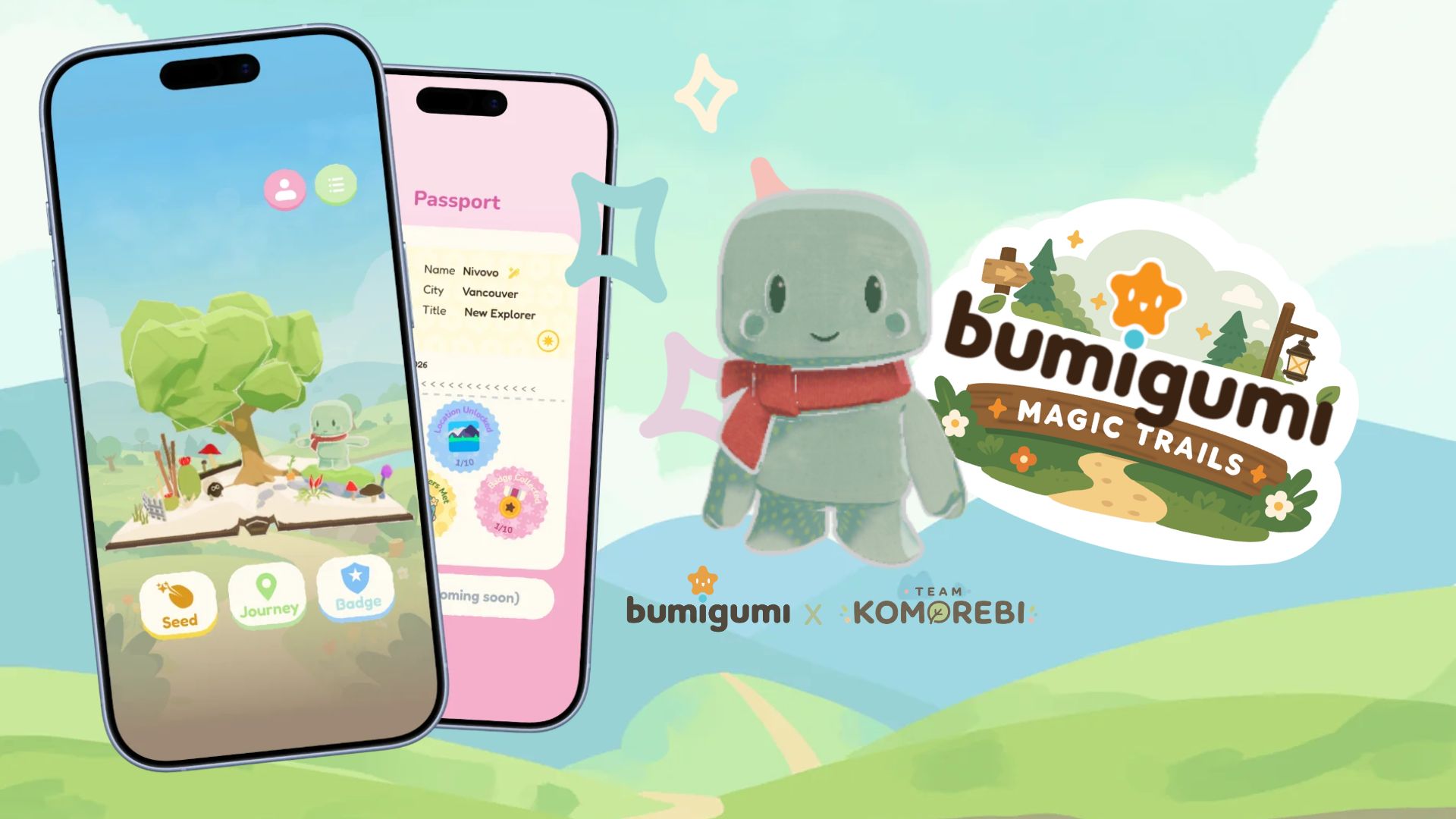
AR interactive for kids
Bumigumi Magic Trail
A location-based AR adventure for children aged 5–10 that turns outdoor exploration into playful discovery, and Vancouver's Stanley Park into an interactive story world.
As the Game Designer, I led the gameplay and AR interaction design, developed the core game systems, and created the UI/UX experience. Working with a seven-person team and Bumigumi Entertainment, we brought the adventure to life as a fully playable prototype.
AR can bring imaginary worlds to life, but it can also pull attention away from the physical environment.
Our challenge was to design an experience where technology supports real-world exploration rather than replacing it — turning observation, movement, and curiosity into meaningful play.
Explore First
The environment leads; the screen follows.
Curiosity Drives Play
Discovery feels rewarding without pressure.
Technology with Purpose
Every AR interaction connects back to the physical world.
Field notesResearch & design approach
Designing for Little Explorers
Understanding how children play, explore, and interact with technology.
Secondary research into children's outdoor play and age-appropriate interaction, then parent interviews on accessibility, safety and family participation — with UNICEF's RITEC-8 framework holding every decision to children's wellbeing.
From Research to Design

Simple to Learn
Approachable gestures, clear feedback, complexity that arrives slowly.

Freedom to Explore
Curiosity and choice, with nothing punished and nothing forced.

Play Beyond the Screen
Every interaction tied to something out there to see, hear or find.
The walkPlayer journey
A Park Full of Little Discoveries
An outdoor adventure shaped by characters, curiosity, and creativity.
Children explore Stanley Park through location-based checkpoints, meeting characters and solving playful AR challenges along the way.
We walked the route before we designed it — the landmarks, the distances, and what a five-year-old can actually see from the path.
Scouting the park
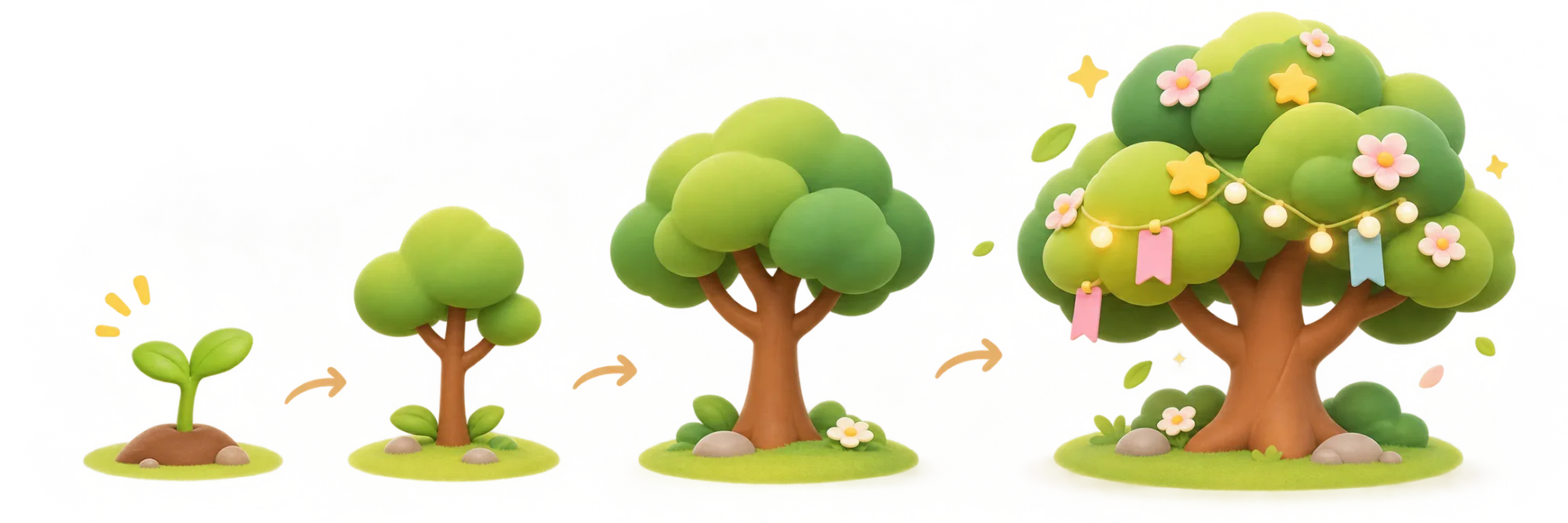
Every discovery feeds the Dream Tree — a creative record of the walk, grown from what the child found around them.
Explore
Follow the trail through the park.
Discover
Meet Luma, Sticky and Pudim.
Interact
Move, listen, look — then solve.
Create
Capture colours to grow the tree.
Five mechanicsAR gameplay design
Making the Real World Playable
Five ways to connect digital interaction with physical discovery.
Instead of conventional tapping, each mechanic turns a physical action — a tilt, a sound, a colour in front of the child — into a playful moment.
01 / 05
Tilt Up
Look to the sky. Make it rain.
Raise the phone toward the sky to summon a rain cloud.
Gyroscope
02 / 05
Shape Matching
Find the landmark. Open the portal.
Align an AR outline with the real Girl in a Wetsuit statue.
Camera / AR tracking
03 / 05
Sound Cues
Listen closely. Follow the clues.
Find hidden elements by ear instead of by screen.
Microphone / audio
04 / 05
Phone Rotation
Turn a gesture into an act of care.
Rotate the phone to pour from a virtual watering can.
Motion sensors
05 / 05
Colour Capture
Bring a little piece of nature home.
Capture real colours to personalise the Dream Tree.
Camera
The interfaceUI/UX design
A Playful World, Made Easy to Explore
Designing an interface that supports the adventure without getting in its way.
Designing with Care
Outdoor play raises questions of attention, safety and privacy. The safeguards — less screen time while walking, location-aware boundaries — are in the Game Design Document.
Beyond the Screens
I kept the Game Design Document, set the UI asset naming convention, and ran QA tracking.
Real explorersTesting & iteration
Learning from Real Explorers
Testing the experience with the people it was designed for.
We moved from internal testing to parent interviews to a playtesting round with children, parents and industry professionals — plus survey feedback from parents and educators.
Internal Testing
Technical feasibility and interaction flow.
Parent Interviews
Expectations, concerns, and children's needs.
External Playtesting
Children's gameplay experience, with feedback from parents and professionals.
The sessions helped us assess interaction clarity, age-appropriateness, usability, and the appeal of the outdoor AR concept.
Adapting to Production
As client priorities shifted toward showcasing more character and IP content, we refined the prototype into a guided checkpoint experience while preserving the core AR interactions.
Journey's endOutcome
From Concept to Playable Reality
A complete AR adventure, built and tested in the real world.
Over the MVP sprint, our seven-person team delivered a playable Android AR prototype with every planned core mechanic implemented, including environmental colour capture — alongside a complete UI/UX experience, character and environment assets, gameplay systems, and production documentation.
- Playable AR Prototype
- Five Core Mechanics
- Real-World Playtesting
- Client-Validated Concept
Reflection
This project taught me how to balance imaginative gameplay with real-world constraints, especially when designing for children. Working with a client whose priorities evolved during production reinforced the value of early, tangible prototypes — next time I would bring interactive demonstrations into stakeholder conversations sooner.

Badge unlocked — the trail is walked and the tree is grown.